
https://complexcareathomeforchildren.com
https://complexcareathomeforchildren.com
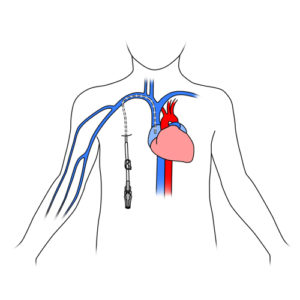
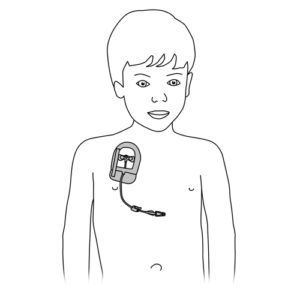
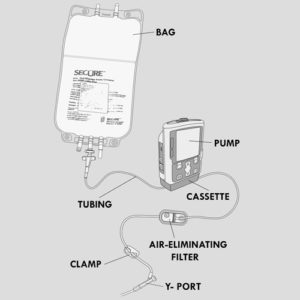
The pump works with non-rechargeable batteries or a rechargeable battery.
It is programmed to automatically deliver the nutrition solution into your child’s catheter at the rate (speed) prescribed by the doctor.
The pump CADD®- Solis VIP was chosen to illustrate and detail the steps of the care methods concerned, as it is the model of pump frequently used for children.
Your child’s healthcare team will supervise the parenteral nutrition treatment and ensure that the equipment is functioning properly. Ask your healthcare team about specific recommendations for your child, including the procedure for changing the protective dressing which protects the insertion site of the catheter.
Refer to your healthcare team if the equipment used for your child is different from what is described in the care methods.
https://complexcareathomeforchildren.com/parenteral-nutrition/
Disclaimer of Liability: By using this site, you acknowledge that you have read this disclaimer and agree to all of its terms. Before making any decisions regarding your health or if you have any medical questions, you should first consult a physician or qualified health care professional who can provide recommendations tailored to your specific needs. The information published on this site does not constitute a recommendation for treatment (preventive or curative), a prescription or a diagnosis and is not a substitute for the advice of a physician or qualified health professional.
As medical and technical knowledge is constantly evolving, the content of this site is made available for information purposes only. The contributors to this site, including clinical experts in pediatrics from across Quebec, make every effort to ensure that the information made available on this site is as accurate and reliable as possible, without guaranteeing the completeness or total absence of error of its content. The opinions contained in this site are the sole responsibility of the author(s) and are not binding on the contributors to this site. These opinions do not necessarily reflect the official viewpoint of the organizations mentioned, nor that of their directors or representatives. The contributors to this site cannot and will not assume any responsibility for the use of the published content or for the information otherwise accessible through any link or reference source. Any quotation or reference to a source external to this site is for informational purposes only and does not constitute an endorsement or claim, express or implied, regarding the content or validity of the information obtained from that external source.
All rights reserved: The contents of this site may not be reproduced or disseminated, in whole or in part, in any manner or by any means, electronic, mechanical, including photocopying, recording, or otherwise, or stored in a retrieval system of any kind that is not limited to private use, without the prior written permission of the copyright holder.
Copyright © 2026 Soins Complexes. Tous droits réservés/All rights reserved.